
Texas Theme
State of Texas
 |
 |
 | |
| Nickname | The Lone Star State |
|---|---|
| Motto | Friendship |
| Demonym | Texan Texian (archaic) |
| Capital | Austin |
| Largest city | Houston |
| Largest metro area | Dallas-Fort Worth-Arlington |
| Area | Ranked: 2nd in the US
Total: 268,581 sq miWidth: 773 miles Length: 790 miles Water: 2.5% |
| Population | Ranked: 2nd in the US
Total: 25,145,561 (2010)Density: 96.3/sq mi |
| Elevation | Highest Point: Guadalupe Peak 8,751 ft Mean: 1,700 ft Lowest Point: Gulf of Mexico 0 ft |
| Before statehood | Republic of Texas |
| Admission to Union | December 29, 1845 (28th) |
State Symbols
| Flower | bluebonnets |
|---|---|
| Tree | Pecan |
| Soil | Houston Black |
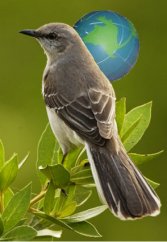
| Bird | Northern Mockingbird |
| Song | Texas, Our Texas |
| Mammal (small) | Nine-banded Armadillo |
| Mammal (large) | Texas longhorn |
| Mammal (flying) | Mexican free-tailed bat |
| Dog | Blue Lacy |
| Air Force | Commemorative Air Force |
| Bread | pan de campo |
| Cooking implement | Dutch oven |
| Dinosaur | Brachiosaur Sauropod |
| Dish | chili con carne |
| Fiber and fabric | cotton |
| Fish | Guadalupe bass |
| Folk dance | square dance |
| Fruit | Texas red grapefruit |
| Gem | Texas blue topaz |
| Gemstone cut | Lone Star Cut |
| Grass | Sideoats grama |
| Insect | monarch butterfly |
| Molecule | buckyball |
| Musical instrument | guitar |
| Nut | Native pecan |
| Pepper (native) | chiltepin |
| Pepper (other) | jalapeño |
| Plant | prickly pear cactus |
| Plays | Fort Griffin Fandangle, The Lone Star, Texas, Beyond Sundown |
| Reptile | Texas horned lizard |
| Shell | lightning whelk |
| Ship | the Battleship USS Texas |
| Shrub | crape myrtle |
| Shrub (native) | Texas sag |
| Snack | tortilla chips and salsa |
| Sport (individual) | rodeo |
| Sport (team) | American football |
| Stone | petrified palmwood |
| Pastry | strudel |
| Vegetable | Texas sweet onion |
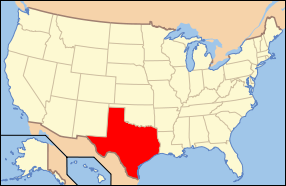
Texas is the second-largest U.S. state by both area and population, and the largest state in the contiguous United States. The name, meaning “friends” or “allies” in Caddo, was applied by the Spanish to the Caddo themselves and to the region of their settlement in East Texas. Located in the South Central United States, Texas is bordered by Mexico to the south, New Mexico to the west, Oklahoma to the north, Arkansas to the northeast and Louisiana to the east. Texas has an area of 268,820 square miles, and a growing population of 24.7 million residents.
Houston is the largest city in Texas and the fourth-largest in the United States, while San Antonio is the second largest in the state and seventh largest in the United States. Dallas-Fort Worth and Greater Houston are the fourth and sixth largest United States metropolitan areas, respectively. Other major cities include El Paso and Austin—the state capital. Texas is nicknamed the Lone Star State to signify Texas as an independent republic and as a reminder of the state’s struggle for independence from Mexico. The “Lone Star” can be found on the Texas State Flag and on the Texas State Seal today.
Due to its size and geologic features such as the Balcones Fault, Texas contains diverse landscapes that resemble both the American South and Southwest. Although Texas is popularly associated with the Southwestern deserts, less than 10% of the land area is desert. Most of the population centers are located in areas of former prairies, grasslands, forests, and the coastline. Traveling from east to west, one can observe terrain that ranges from coastal swamps and piney woods, to rolling plains and rugged hills, and finally the desert and mountains of the Big Bend.
The term “six flags over Texas” came from the several nations that had ruled over the territory. Spain was the first European country to claim the area of Texas. France held a short-lived colony in Texas. Mexico controlled the territory until 1836 when Texas won its independence, becoming an independent Republic. In 1845 it joined the United States as the 28th state. The state’s annexation set off a chain of events that caused the Mexican-American War in 1846. A slave state, Texas declared its secession from the United States in early 1861, joining the Confederate States of America during the American Civil War. After the war and its restoration to the Union, Texas entered a long period of economic stagnation.
One Texas industry that thrived after the Civil War was cattle. Due to its long history as a center of the industry, Texas is associated with the image of the cowboy. The state’s economic fortunes changed in the early 20th century, when oil discoveries initiated an economic boom in the state. With strong investments in universities, Texas developed a diversified economy and high tech industry in the mid-20th century. As of 2010 it shares the top of the list of the most Fortune 500 companies with California at 57. With a growing base of industry, the state leads in many industries, including agriculture, petrochemicals, energy, computers and electronics, aerospace and biomedical sciences. It leads the nation in export revenue since 2002 and has the second-highest gross state product. Texas’ GDP per capita (nominally) is ranked 29th in the nation, which is below the national average.
Silly Joke
Everybody in Texas remembers the Alamo. In fact, the desert menu of one Texas restaurant says, “Remember the à la mode!”
Theme Elements
The photo in the titlebar was taken by Wry Me, which she might not even recognize since it’s a thin slice of a much larger photo, but I needed a thin slice for that space and Texas has a lot of grasslands so grass seemed good to me!
The number of photos across the bottom of the page vary based on the width of your browser, but if you see one or more photos, the first one will be of Great Bend NP provided by PhotoPam. If you see two photos at the bottom, the one on the right is a lake of Fort Parker SP submitted by Bluebutterfly.
Members
Now, time for a quick shout out to everyone on Atlas Quest from this state!
Letterboxing Cities
And, here are all of the cities in Texas we’ve hit with letterboxes!